Just Being There Is Enough: Why Showing Up Beats Every Gift You'll Ever Give
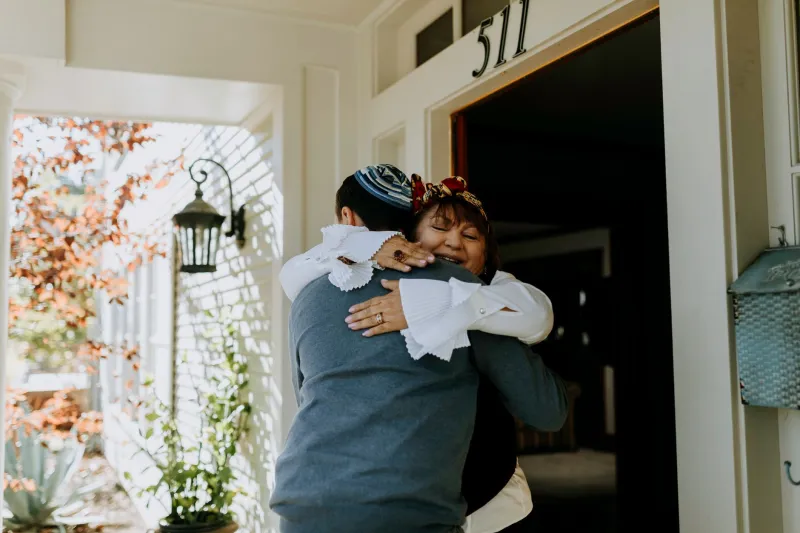
It was a Wednesday night in late October when Dana Kowalski drove three hours from Columbus to her sister's house in Cincinnati—not for a birthday, not for a holiday, just because her sister had sounded a little off on the phone. She showed up with gas station coffee and no plan. They sat on the back porch until midnight talking about nothing in particular. Her sister still calls it one of the most meaningful nights of her life.
No gift card. No elaborate gesture. Just Dana, tired from a long week, showing up anyway.
We talk a lot about quality time in this country—the idea that what matters isn't how much time you spend together but how intentional that time is. And while there's real truth in that, we've taken it a little too far. Somewhere along the way, it became an excuse. We skip the soccer game because we'll take her to dinner next weekend. We miss the recital because we'll make it up with a special trip. We tell ourselves the gesture we're planning will matter more than the moment we're avoiding.
Spoiler: it usually doesn't.
What Families Actually Remember
Think back to the moments in your family that still get brought up at the dinner table—the ones that turn into stories. Chances are, most of them aren't tied to an expensive vacation or a perfectly curated gift. They're tied to who was in the room.
Researchers who study family dynamics have noted for decades that children, in particular, measure love not by what they receive but by who shows up consistently. The dad who attended every Little League game even when his kid was benched. The grandmother who drove two states over for a kindergarten graduation that lasted eleven minutes. The uncle who sat in a hospital waiting room for six hours just so his brother wouldn't sit there alone.
These aren't dramatic acts of heroism. They're just presence. And presence, it turns out, is extraordinarily rare.
The Myth of the Perfect Gesture
Here's something worth sitting with: the pressure to make a moment special often gets in the way of the moment itself. We delay showing up because we don't know what to say. We skip the event because we can't stay for the whole thing. We hold off on the visit because we want to have something meaningful to offer when we get there.
But families aren't looking for polished. They're looking for you.
Marcos Rivera, a dad of four in the Phoenix area, told his kids he'd make it to their annual school talent show—but the week got away from him and he almost backed out. He arrived late, stood in the back, and watched the last ten minutes of his daughter's dance number from the doorway. He thought she hadn't seen him. After the show, she ran straight past her teacher, past her friends, and wrapped her arms around his waist. "You came," she said. That was it. That was the whole conversation. He still gets choked up telling that story.
The gift he'd bought her for the occasion? She doesn't remember what it was.
When You Don't Know What to Say, Go Anyway
One of the biggest reasons people skip out on family moments—especially hard ones—is that they don't know how to handle them. A family member going through a divorce. A parent who just got a scary diagnosis. A teenager who's clearly struggling but won't talk about it. We convince ourselves that if we can't fix it or say the right thing, we shouldn't intrude.
But here's what people in the middle of hard seasons will tell you, almost universally: they don't need you to fix anything. They just need to know they're not alone in the room.
Showing up when things are messy is actually more powerful than showing up when everything's celebratory. It signals something deeper than affection—it signals commitment. It says, I'm not just here for the good stuff.
If you've ever avoided a family gathering because you didn't know what to say about someone's loss or struggle, give yourself permission to go without a script. "I don't know what to say, but I wanted to be here" is one of the most honest and comforting things one human can offer another.
Practical Ways to Prioritize Presence
Being more present doesn't require a dramatic life overhaul. It starts with small, deliberate choices.
Put it on the calendar like it's non-negotiable. Family events have a tendency to get bumped by things that feel more urgent. Treat the school play or the cousin's graduation party the way you'd treat a work deadline—something you protect rather than sacrifice.
Show up even when you can't stay long. Half an hour at a birthday party matters. Ten minutes at a graduation reception matters. People notice who made the effort, not just who stayed the longest.
Leave your phone in your pocket. This one's harder than it sounds, but it's worth it. Being physically present while mentally scrolling isn't really showing up—it's just occupying space. When you're there, be there.
Say yes to the low-key invitations. The Sunday dinners, the impromptu cookouts, the "we're just hanging around if you want to come by" texts—these casual moments are often where the best memories get made. They don't feel important until years later when you realize they were everything.
Be honest when you can't make it, and follow through when you say you will. Trust is built in the small moments. If you say you'll be there, be there. If you genuinely can't, say so directly and make a concrete plan to connect another way.
The Quiet Legacy of Showing Up
There's a version of your family story being written right now, in real time. Not in photo albums or highlight reels, but in the accumulated memory of who came when it mattered. Who sat at the table. Who drove through the rain. Who answered the phone at 11 p.m. and stayed on the line.
The families who feel close—truly close, not just obligated—are usually the ones who've made a practice of showing up for each other, even imperfectly, even inconveniently, even when there was nothing particularly special about the occasion.
You don't have to be the most eloquent person in the room. You don't have to bring anything impressive. You just have to come.
That, more than any gift you'll ever find or any trip you'll ever plan, is what your people will carry with them. The memory of you, there, choosing them—that's the thing that lasts.