How the Biggest Family Blowup Became the Best Thing That Ever Happened to Us
Nobody puts "epic argument at Thanksgiving" on the highlight reel. Nobody frames the photo from the year two brothers didn't speak for six months. And yet, if you sit down with almost any close-knit family and ask them when things really clicked — when they stopped being people who shared a last name and started being people who genuinely had each other's backs — the answer is almost always some version of the same story: it started with a fight.
That's a little uncomfortable to admit. We like our family stories tidy. We want the scrapbook version, the one with the matching outfits and the golden-hour lighting. But the truth is, the moments that define a family aren't usually the smooth ones. They're the ones where everything went sideways, and somehow, everyone stayed.
When Competition Goes Too Far (And Then Gets Funny)
Ask Deb, a mom of three from outside Columbus, Ohio, about the summer her two oldest kids — then 14 and 16 — decided to compete over literally everything. Who got a better grade, who mowed the lawn faster, who their parents loved more. It escalated until one particularly hot July afternoon when a backyard relay race ended in a full-on shouting match, a knocked-over folding table, and a garden hose pointed in the wrong direction.
"It was genuinely awful in the moment," she says, laughing now. "But my youngest, who was nine at the time, started narrating it like a sports announcer. And somehow that just... broke the tension. Everyone started cracking up, including the two who were fighting."
That moment — the absurdity of it, the narration, the soaked patio furniture — became one of their family's most-told stories. Her kids are in their twenties now, and the older two are genuinely close. Deb thinks the relay race disaster was a turning point. "They saw each other get really ugly, and they also saw each other choose to laugh instead of stay mad. That sticks with you."
Competition between siblings isn't inherently destructive. In a lot of families, it's the engine that drives them to actually know each other — to understand what the other person values, what makes them tick, what they're afraid of losing. The problem is when nobody ever pumps the brakes. When someone finally does, even accidentally, it can reset everything.
The Crisis That Forced Everyone to Get Real
Sometimes it's not sibling rivalry in the classic sense. Sometimes it's a genuine family crisis — a health scare, a financial collapse, an unexpected loss — that exposes fault lines that had been quietly forming for years. And in the scramble to deal with the actual emergency, old grudges get deprioritized. Roles shift. People surprise you.
Marco, a dad from the Tampa area, watched this happen when his mother had a stroke a few years ago. He and his two sisters had a complicated dynamic — years of unspoken competition over who was the most responsible, who did the most for their parents, who sacrificed the most. "We were all keeping score," he admits. "None of us would have said that out loud, but we were."
The stroke changed the math. Suddenly there was no time to keep score. His youngest sister, who he'd privately written off as the least reliable of the three, drove eight hours overnight without being asked. His other sister, who he'd always seen as controlling, turned out to be exactly the kind of organized, clear-headed person you want in a hospital waiting room. And Marco himself discovered he was better at the emotional stuff than he'd ever given himself credit for.
"We came out of it knowing each other differently," he says. "Not better or worse — just actually. Like, for real."
His mom recovered. And the three siblings now have a group text that gets used regularly, which Marco says would have seemed impossible two years before the stroke.
Why Conflict Writes the Best Origin Stories
Family therapists and researchers have long noted that conflict, handled imperfectly but honestly, tends to build more durable relationships than conflict avoidance. When families never fight, they often never fully trust each other either — because everyone's performing a version of themselves rather than showing up as they actually are.
The families who come out of hard moments closer aren't the ones who fought cleanly or resolved everything neatly. They're the ones who stayed in the room. Who showed up the next day. Who eventually found a way to laugh, or cry, or at minimum acknowledge that something real had happened between them.
That shared experience — we went through something together — is more bonding than a hundred easy Sunday dinners. It becomes part of the family's internal mythology. The story you tell at reunions. The reference point that anchors everything else.
Turning the Mess Into the Memory
If your family is in the middle of one of these moments right now, it probably doesn't feel like an origin story. It feels like a disaster. That's okay. Most good origin stories do.
A few things that tend to help:
Give it some air. Not every conflict needs to be resolved in the same conversation it started in. Sometimes the most important thing is to let everyone cool down before the real talking happens.
Let someone be the narrator. Every family has someone who can find the absurdity in a tense situation. Give that person permission to do their thing. Laughter isn't the same as dismissing what happened — it's often the bridge that gets you to the actual conversation.
Name what changed. Once the dust settles, be willing to say out loud what the experience revealed. "I didn't know you'd show up like that" is a powerful sentence. So is "I'm sorry I underestimated you."
Write it down eventually. Not right away — but once there's enough distance to see it clearly, capture the story. The messy version, not the cleaned-up one. Those are the stories your kids will actually want to hear someday.
The Gathering That Almost Didn't Happen
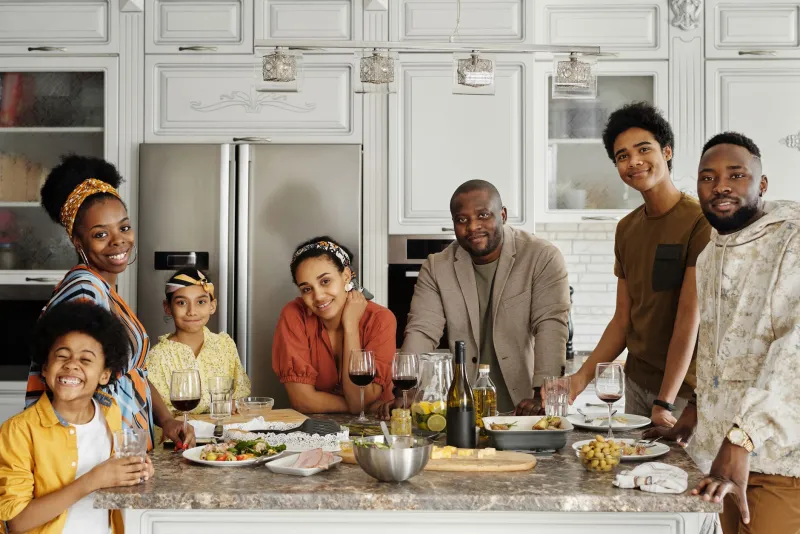
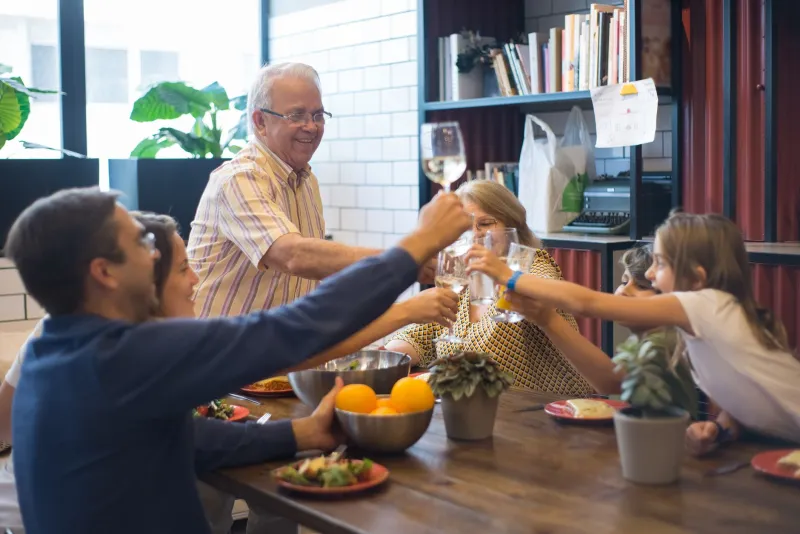
The funny thing about family conflict is that it often makes the eventual gathering — the reunion, the holiday, the backyard barbecue where everyone finally shows up in the same place again — feel more earned. More real. You're not just people who happen to share DNA. You're people who went through something and chose to keep showing up for each other anyway.
That's what makes a family special. Not the matching outfits. Not the perfect photos. The fact that you've seen each other at your worst and you're still here, passing the potato salad and arguing about the thermostat and laughing about the time somebody knocked over the folding table.
Those are the moments worth celebrating. Every single one of them.