That Framed Portrait on the Wall Isn't Really Your Family
Let's be honest for a second. That gorgeous family portrait hanging in your hallway — the one where everyone's in matching earth tones, the kids are sitting still, and nobody has a hair out of place — took about three hours, two meltdowns, and a bribe involving ice cream to produce. It looks incredible. It also looks like a family you might see in a furniture store catalog.
And that's kind of the problem.
There's nothing wrong with professional family portraits. They can be genuinely beautiful, and for certain occasions — a milestone birthday, a new baby, a big anniversary — they make total sense. But somewhere along the way, the staged portrait became the way we document our families, and we've started confusing a polished image with an actual memory.
The Real Price Tag
A mid-range professional family photo session in the US runs anywhere from $200 to $600, and that's before you factor in prints, digital files, or that large canvas print you'll inevitably want for above the fireplace. Add in the coordinated outfits (because your kids definitely don't already own linen in complementary neutrals), the pre-session haircuts, and the gas to drive to whatever scenic field or downtown alley the photographer loves, and you're looking at a real investment.
None of that is inherently bad. But it's worth asking: what exactly are you paying for? A record of what your family looked like when everyone was performing their best version of themselves? Or something that actually tells the story of who you are?
Because those are two very different things.
What We Actually Remember
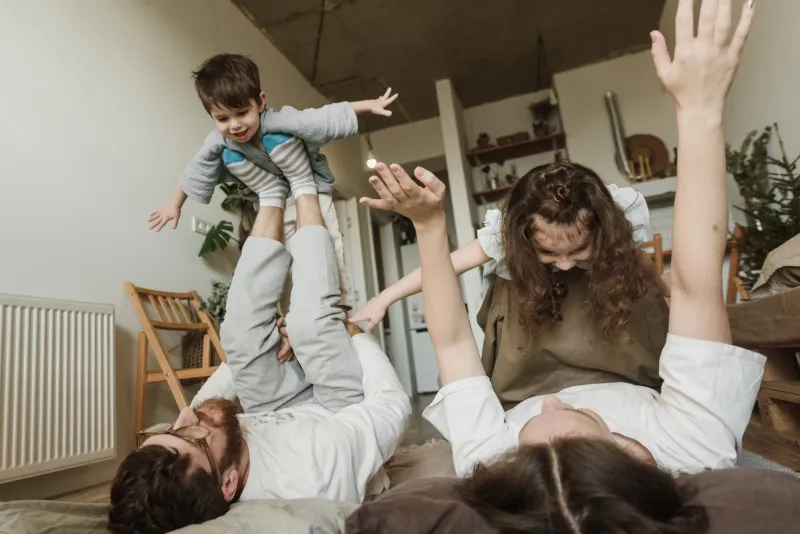
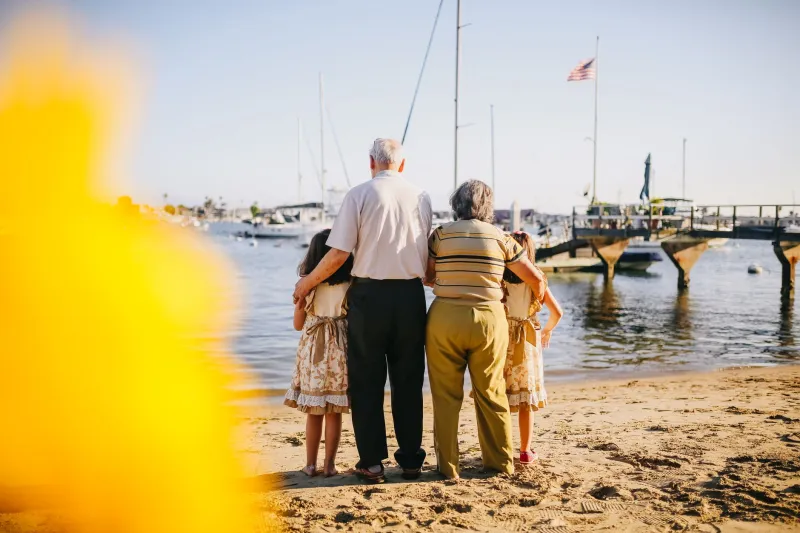
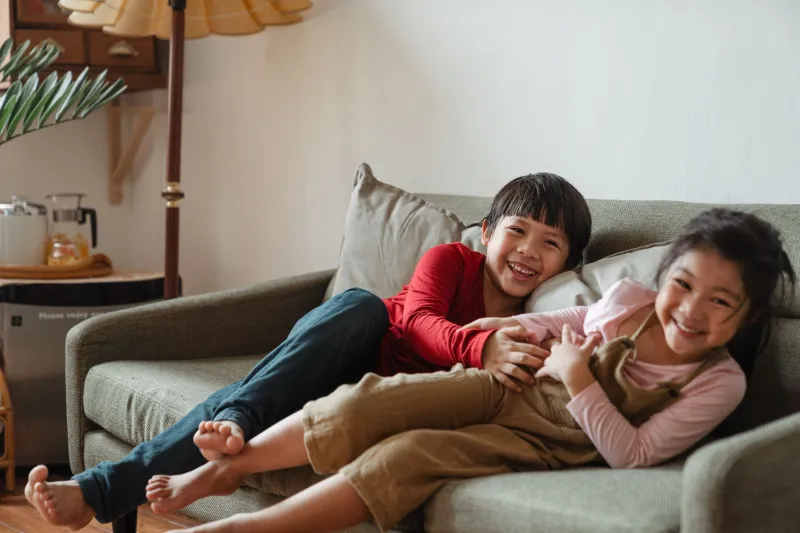
Think about the photos from your own childhood that you can't stop coming back to. Not the stiff school portraits or the formal Easter Sunday shots. The ones that get you every time are probably something else entirely — your dad laughing so hard he's doubled over at a cookout, your grandmother in a worn apron with flour on her cheek, a pile of cousins crammed onto a too-small couch during a holiday visit.
Those photos are usually slightly blurry. The lighting is probably terrible. Someone's mid-blink. And they are everything.
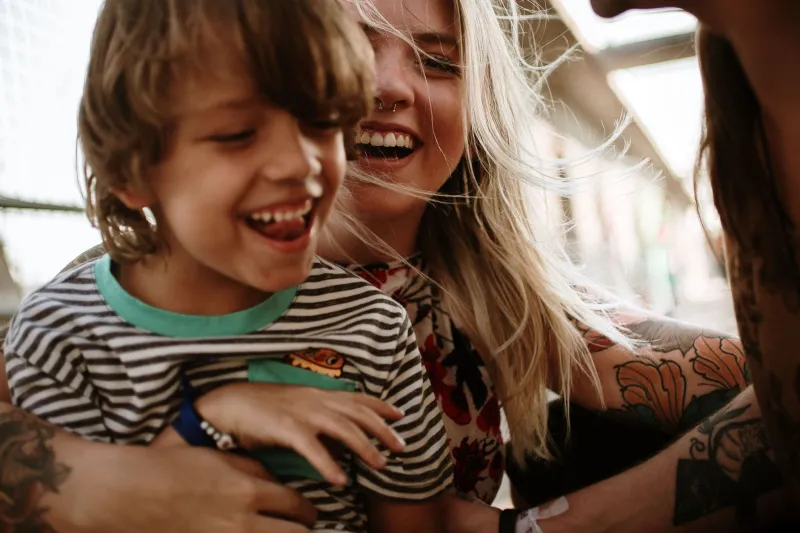
That's not a coincidence. Candid moments capture something that a posed portrait fundamentally cannot: the feeling of being inside a life. When you look at an unguarded photo of someone you love — caught in a real laugh, distracted by something off-camera, existing without awareness of the lens — you're not just seeing what they looked like. You're remembering what it felt like to be around them.
The Pressure to Document Perfectly
Social media has a lot to answer for here. When family photos exist primarily to be shared, they start being composed for an audience rather than for the people in them. The goal shifts from "let's remember this" to "let's show people how great things are," and that's a subtle but meaningful change.
It also puts a weird kind of pressure on the moments themselves. When your kid's birthday party is also a content opportunity, you're not fully at the birthday party. When you're directing everyone into a sunset shot during vacation, you're not really watching the sunset together. The documentation can start to eat the experience it's supposed to preserve.
This isn't about shaming anyone — most of us do this to some degree, and the impulse to hold onto good moments is genuinely sweet. But it's worth noticing when the camera becomes a way of managing a moment rather than living it.
A Different Way to Think About Family Photos
So what's the alternative? It's not "throw out your phone and never hire a photographer again." It's more about shifting what you're actually trying to capture.
Let someone else hold the camera sometimes. At your next family gathering, designate one person — ideally someone who genuinely enjoys photography — to just wander and shoot candidly. Not directing anyone, not asking people to look up. Just watching and catching what's real. You'll be amazed what shows up.
Stop waiting for the "right" moment. The chaos of a family dinner, the post-birthday-party wreckage of wrapping paper and cake crumbs, the pile of shoes by the back door — these things tell a story too. Document the ordinary. In twenty years, the ordinary is what you'll miss.
Give yourself permission to look bad. This one's harder than it sounds. But a photo where you're genuinely laughing, even if your chin is doing something weird, is worth ten times more than a photo where you look perfect and feel nothing when you see it.
Think about video more. A thirty-second clip of your kids arguing over a board game, or your family singing happy birthday slightly off-key, captures something a still photo simply can't. You don't need fancy equipment — your phone is fine. The voices, the motion, the specific energy of a moment: that's what video preserves.
The Portrait Still Has Its Place
Here's the thing — we're not anti-portrait over here. There's real value in having a beautiful, well-composed image of your family at a particular point in time. When done well, professional family photography is a genuine art form, and a great photographer can capture warmth and personality even in a posed setting.
But it shouldn't be the only way you document your family's life. And it probably shouldn't be the primary way, either.
The Waters family — whatever that looks like for you — is not a catalog image. It's a specific, messy, loud, loving collection of people who have inside jokes and weird habits and a particular way of being together that is completely irreplaceable. That's what's worth preserving.
The coordinated linen outfits are optional.
What You'll Actually Treasure
Years from now, when your kids are grown and you're looking back at this season of your life, what do you think you'll want to see? The perfectly lit portraits where everyone held it together for twenty minutes? Or the Saturday morning chaos, the backyard birthday parties that ran too long, the road trip photos where the kids are asleep against each other in the back seat?
Both have value. But only one of them is really, truly yours.
So the next time you're tempted to put the phone away because the lighting is bad or someone's hair is a mess — maybe don't. Take the imperfect picture. The imperfect ones are usually the ones that matter most.